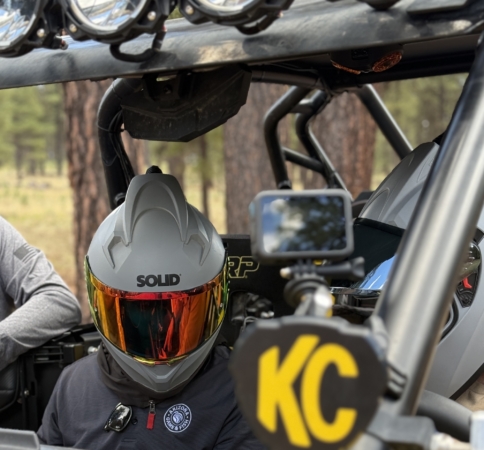
Blazing Trails for Future Generations: ‘Riding Shotgun’ Teams Up With KC Lights
Episode 4 follows Taylor Urich of KC HiLiTES through OHV prep, trail etiquette, and how to keep these routes open for the next generation.
# Article: How One YouTube Series Is Teaching America's Next Generation to Protect Our Public Trails
The future of America's outdoor recreation depends on a generation that understands something most of us never learned: trail stewardship isn't optional—it's essential. As public lands face increasing pressure from development, environmental concerns, and overuse, a new partnership between the YouTube series "Riding Shotgun" and KC HiLiTES is blazing trails for future 2026 outdoor enthusiasts by teaching young riders the practical skills and ethical responsibilities that keep routes accessible for decades to come. In Episode 4, host Taylor Urich walks viewers through everything from proper vehicle preparation to leave-no-trace principles—a masterclass that's arriving at precisely the moment when outdoor recreation participation is at an all-time high, and misconduct threatens to close gates permanently.
Why this matters right now: Environmental agencies are making unprecedented decisions about which trails remain open and which get permanently restricted, often based on user behavior documented over just a few seasons. One careless group can result in a route's closure for an entire region. For recreational off-highway vehicle (OHV) enthusiasts—a community numbering in the millions across America—understanding and practicing responsible trail use has shifted from suggestion to survival strategy.
## Understanding the 'Riding Shotgun' and KC HiLiTES Partnership
"Riding Shotgun" has built a substantial following by documenting real outdoor adventures with practical educational value embedded throughout. The series doesn't glamorize recklessness; instead, it normalizes responsible recreation as the baseline expectation. Taylor Urich, the featured guide in Episode 4, brings credibility through his work at KC HiLiTES, a company specializing in LED lighting systems and accessories for off-road vehicles—but the partnership transcends product placement.
What makes this collaboration significant for outdoors news 2026 is the explicit focus on trail preservation as a business and cultural imperative. KC HiLiTES and "Riding Shotgun" recognize that the OHV industry's future depends entirely on public access to trails. No trails, no industry. No responsible users, no trails. By investing in educational content about proper vehicle preparation and trail etiquette, both organizations are playing long-term strategy.
## OHV Prep 101: What Episode 4 Teaches
Episode 4 dives into the fundamentals that separate responsible riders from the ones who create problems. Proper vehicle maintenance—tire pressure, suspension health, brake function—isn't just about personal safety; it directly impacts trail conditions. An improperly maintained vehicle causes disproportionate damage, tears up surfaces unnecessarily, and can get stuck, requiring rescue and causing additional environmental disruption.
The episode covers essential preparation steps: checking fluid levels, inspecting lighting systems (where KC HiLiTES' expertise becomes relevant), verifying recovery equipment, and understanding vehicle-specific limitations. These aren't boring mechanical lessons; they're presented as the foundation for truly enjoyable off-road experiences. A well-maintained vehicle performs better, handles unexpected terrain more safely, and leaves minimal environmental footprint.
Additionally, Urich discusses route-specific preparation—understanding weather impacts, seasonal closures, permit requirements, and trail difficulty ratings. This "know before you go" mentality represents a seismic shift in how outdoor recreation is being framed to younger generations.
## Trail Etiquette and the Business of Keeping Routes Open
Here's where the episode becomes truly essential viewing: explicit instruction on trail etiquette directly preserves public access. This includes yielding to uphill traffic, staying on marked routes (which prevents erosion and habitat damage), packing out all trash, and respecting wildlife. These practices seem obvious to longtime outdoors enthusiasts, but they're not intuitive to newcomers—and the pandemic-era explosion in OHV participation means millions of newcomers are hitting trails simultaneously.
The best blazing trails for future sustainability combine environmental consciousness with practical trail-use rules. Agencies making decisions about closures look at measurable impacts: widening trails from excessive off-route riding, vegetation loss, water quality impacts, and wildlife disturbance. Users who stay on-route, pack out all gear, and report trail damage to land managers create the conditions for long-term access.
Urich emphasizes something often overlooked: being the friendly, responsible user who educates others is more effective than complaints or confrontation. Users who model good behavior, offer helpful tips to newcomers, and actively participate in trail maintenance create positive community associations with off-roading.
## What This Means for Your 2026 Outdoor Plans
If you're planning off-road adventures in 2026, the blazing trails for future guide approach taught in this series should inform your preparation. Before your next trip: watch the episode, conduct a thorough vehicle inspection, research your specific trail's regulations and conditions, and commit to staying on-route. Consider joining a local OHV club—these organizations are often front-line defenders of trail access and trail maintenance.
For parents introducing younger family members to off-road recreation, this content provides a framework for teaching responsible use from day one. It's far easier to establish good habits than to break bad ones.
## Bottom Line
"Riding Shotgun" Episode 4 represents a critical cultural moment for American outdoor recreation: the formalization of trail stewardship as recreational responsibility. By watching, learning, and practicing the skills and ethics presented here, you're not just planning a better adventure—you're directly participating in blazing trails for future generations and ensuring these routes remain accessible for decades to come.
Source: gearjunkie.com