Vandals Fined $500 for Defacing, Stealing Rocks at National Park Site
The four individuals, who also tried to take 100 pounds of rocks from the protected area, were banned from Pictured Rocks National Lakeshore for a…
# Vandals Fined $500 for Defacing National Park Rocks—and What It Means for Your Outdoor Visits
If you're planning a summer trip to one of America's most stunning national parks, here's something that should concern you: a recent enforcement action at Pictured Rocks National Lakeshore reveals exactly how seriously federal authorities are cracking down on rock theft and park defacement. Four individuals were recently fined $500 each for attempting to steal approximately 100 pounds of rocks and deface the protected landscape—a stark reminder that national parks aren't free-for-all souvenir shops. As outdoors news 2026 increasingly highlights environmental protection measures, understanding these enforcement actions matters directly to you: the fines are getting steeper, the bans are longer, and if you're not careful about what you take from public lands, you could face serious legal consequences.
The incident at Pictured Rocks, located along Michigan's stunning Upper Peninsula shoreline, has become emblematic of a broader problem plaguing America's protected natural areas. Rock theft and landscape defacement might seem like minor infractions compared to other crimes, but they're systematically destroying fragile ecosystems and the visual integrity of places millions of Americans visit annually. The National Park Service has made it clear: vandals fined $500 for similar offenses represent just the beginning of what could be a much costlier legal battle.
## What Happened at Pictured Rocks National Lakeshore
The four individuals involved in this incident didn't simply pocket a few pebbles as souvenirs. They attempted to remove approximately 100 pounds of rocks from a federally protected area—a substantial theft that would have noticeably altered the landscape. Additionally, they defaced rocks that are part of the park's geological and scenic heritage. The National Park Service subsequently banned them from the facility, a punishment that extends far beyond the $500 fine per person.
Park officials didn't disclose the exact duration of the ban, but such prohibitions typically range from one to ten years or longer, depending on the severity of the violation and the individual's prior record. For repeat offenders, lifetime bans are increasingly common across the National Park Service system.
## Understanding the Legal and Environmental Impact
The $500 fine might not sound astronomical to some visitors, but it's part of an escalating enforcement strategy. When courts process vandals fined $500 for park violations, they're also considering restitution costs—the expenses required to repair damage, conduct environmental assessments, and restore affected areas. In many cases, total penalties exceed $1,000 per person, especially when combined with potential state-level charges.
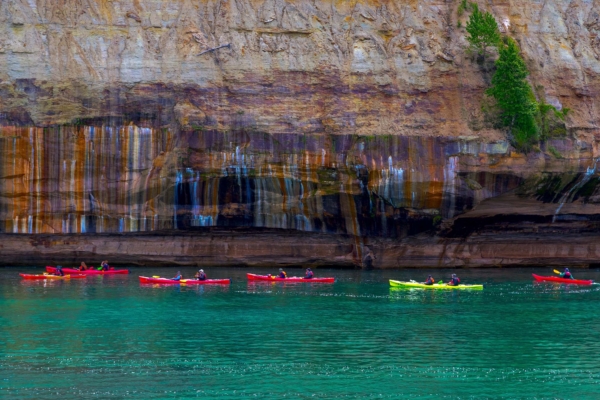
The real issue transcends money. Rock theft fundamentally destabilizes ecosystems. Rocks provide crucial habitat for insects, amphibians, and small mammals. When removed, these creatures lose shelter. Moreover, the geological formations at Pictured Rocks—famous for their dramatic 200-foot cliffs composed of sandstone, slate, and ironstone—took millions of years to form. A few pounds of rocks stolen today represent irreplaceable natural heritage.
"Every rock taken is a piece of history and habitat that's gone forever," explains the rationale behind these enforcement actions, according to park service guidance documents. This philosophy has driven the best vandals fined $500 for cases into the national conversation about responsible tourism.
## What This Means for Your Park Visits in 2026
If you're planning outdoors news 2026 season adventures, the message is unambiguous: leave everything natural exactly as you find it. The "Leave No Trace" principle isn't just environmental ethics—it's the law, and enforcement is intensifying.
Federal Code explicitly prohibits removing natural features from national parks without explicit permission. This includes rocks, plants, crystals, fossils, and even sand. Violations fall under the Archaeological Resources Protection Act (ARPA) and general park regulations, carrying potential penalties ranging from $100 to $20,000 and up to 12 months in jail for serious violations.
For visitors seeking a vandals fined $500 for guide to what's actually permitted, the answer is simple: take photographs, not specimens. Most national parks allow unlimited photo documentation but zero material removal. Premium souvenirs should come from visitor centers and gift shops—the park's official revenue stream that actually funds conservation.
## Bottom Line
The four individuals facing $500 fines at Pictured Rocks represent a growing enforcement trend that every national park visitor should understand: taking rocks, artifacts, or natural features from protected lands isn't a victimless souvenir—it's federal vandalism with real consequences. Before your next national park adventure, commit to the Leave No Trace principle: observe, photograph, and preserve the landscape for future generations while protecting yourself from expensive legal trouble.
Source: gearjunkie.com